Learn from the right sources
The best way to learn a cuisine is from people who grew up cooking it. Look for cookbooks, videos and community cooking classes by cooks from that culture, and read the introductions, which often explain why a dish is made a certain way. When two sources disagree, both may be right: dishes change from town to town and family to family.
Before you cook a new dish, find out how it is served and eaten. Knowing whether it is a centerpiece, a side dish or a street snack, and what it goes with, helps you cook and serve it the way it is meant to be enjoyed.
Core techniques
A handful of methods covers a great deal of the world's cooking. Learn these and most recipes will feel familiar.
- Building a flavor base. Cooking aromatics such as onion, garlic, ginger or a spice paste in fat before anything else. Found in nearly every cuisine.
- Tempering. Frying whole spices in hot fat for seconds to release their flavor, then pouring them into a dish. Central to South Asian cooking.
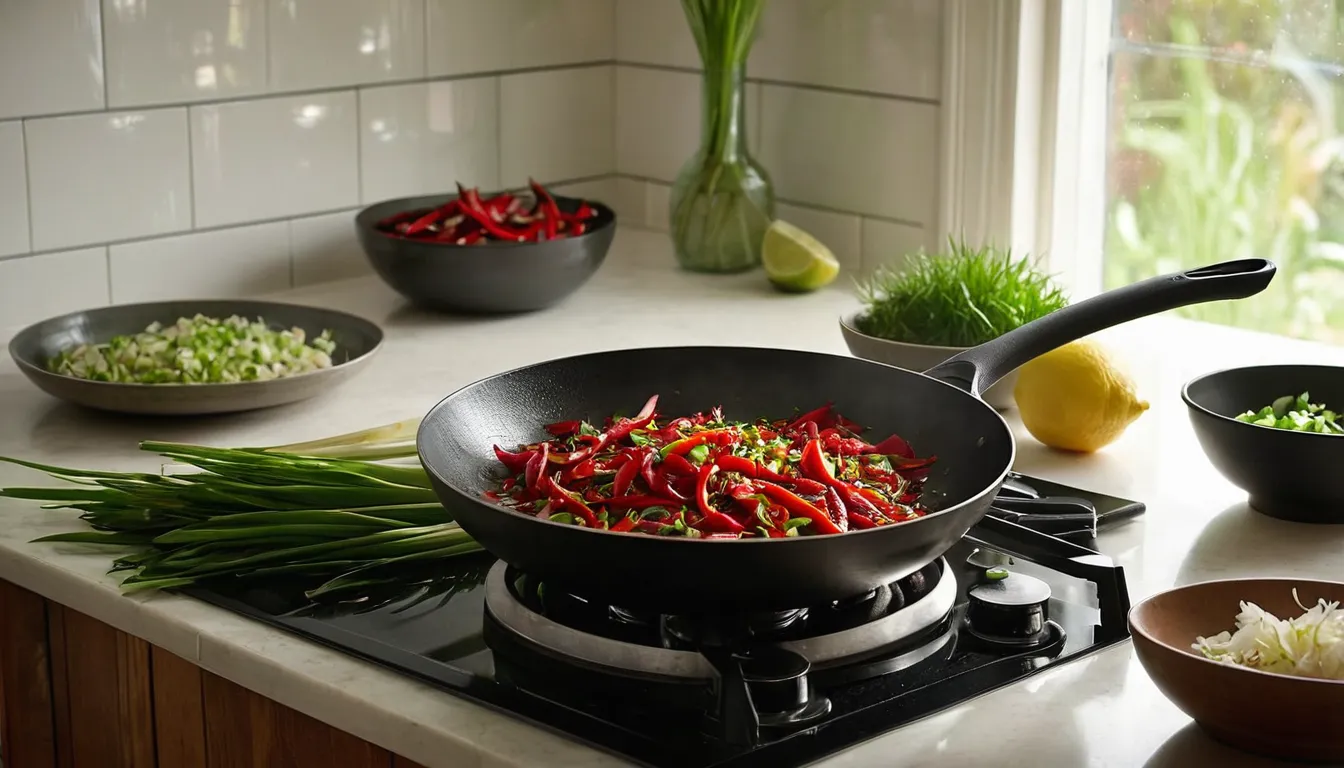
- Stir-frying. Cooking small, even pieces over very high heat while moving them constantly. Common in East and Southeast Asia.
- Braising. Browning meat or vegetables, then cooking them slowly in a little liquid under a lid. Tagines, ragùs and adobo all use it.
- Steaming. Cooking food over boiling water, gently and without fat. Used for dumplings, fish, tamales and couscous.
- Grilling over fire. From satay and suya to jerk and kebabs, many cuisines use direct heat and a marinade or spice rub.
Tools worth having
A heavy pan, a lidded pot and a sharp knife do most of the work. Beyond those, three tools earn their space if you cook a lot of world food: a mortar and pestle for pastes and spices, a wok for stir-frying and steaming, and a simple steamer basket. A blender helps with chile sauces and the pepper bases of West African cooking. A cast iron griddle or heavy skillet handles tortillas, roti and dosa.
Honest substitutions
Sometimes you cannot find an ingredient. A swap can still give you a good meal, as long as you know what changes. Where no real swap exists, it is better to say so and make a different dish.
| If you can't find | Try | What changes |
|---|---|---|
| Makrut lime leaf | Lime zest with a bay leaf | Fresher and less floral |
| Sichuan pepper | No true swap. Black pepper with a little lemon zest hints at it | The tingle is gone |
| Gochugaru | Mild chile flakes with a pinch of sweet paprika | Different texture and a less fruity heat |
| Fish sauce | Soy sauce with a little extra salt | Loses the deep, funky note; works for vegetarians |
| Tamarind | Lime juice with a little brown sugar | Brighter and less fruity |
| Smoked paprika | Sweet paprika plus a pinch of ground chipotle | Smoke comes from a different chile |
| Ancho chile | Another mild dried chile, such as pasilla or guajillo | Each has its own fruit and bitterness |
| Saffron | No true swap. Turmeric adds color only | The aroma is missing |
| Ghee | Butter with a splash of oil, or a neutral oil | Less nutty and burns sooner |
| Lemongrass | Lemon zest | Sharper, with none of the grassy note |
Cook with respect
- Use the dish's real name, and learn how to say it.
- If you change a dish a lot, say it is inspired by the original rather than calling it the same thing.
- Cook one cuisine for a while before moving on. Patterns become clear after a few dishes.
- Buy from shops that serve the community when you can. You will often find better ingredients and good advice.
Handling chiles safely
The heat in chiles comes from capsaicin, which clings to skin. Wear disposable gloves when cutting very hot chiles, wash the board and knife afterwards, and keep your hands away from your eyes. Toasting dried chiles can release fumes that make you cough, so open a window. If a dish turns out too hot, dairy, starch and a little sugar or acid help soften it.
Food safety basics
A few dishes in world cooking call for extra care. Raw or lightly cured fish, as in ceviche and some sushi, needs fish sold as suitable for raw eating and kept very cold. Cooked rice should be cooled quickly and refrigerated, since it can carry bacteria that survive cooking. Home fermentation, such as kimchi or injera batter, is safest when you follow tested instructions. For current, detailed advice, use your national food safety agency:
- FoodSafety.gov, the US government's food safety portal
- US Food and Drug Administration: Food, including food allergen guidance
- World Health Organization: Food safety
Cooking at home questions
Can I make these dishes milder?
Yes. Use fewer or milder chiles and remove their seeds and ribs, where much of the heat sits. Keep the other spices, so the dish still tastes like itself.
How do I make a dish vegetarian?
Many cuisines already have strong vegetarian traditions, especially in South Asia and Ethiopia. Start with those dishes rather than removing the meat from a meat-centered one.